The Armbruster Lab
Research
The Armbruster lab studies how microbial populations interact and evolve in biofilms, and how this evolutionary history shapes their roles in infection, environmental processes, and ecosystem function.
Projects
Microbial evolution in structured, resource-limited environments
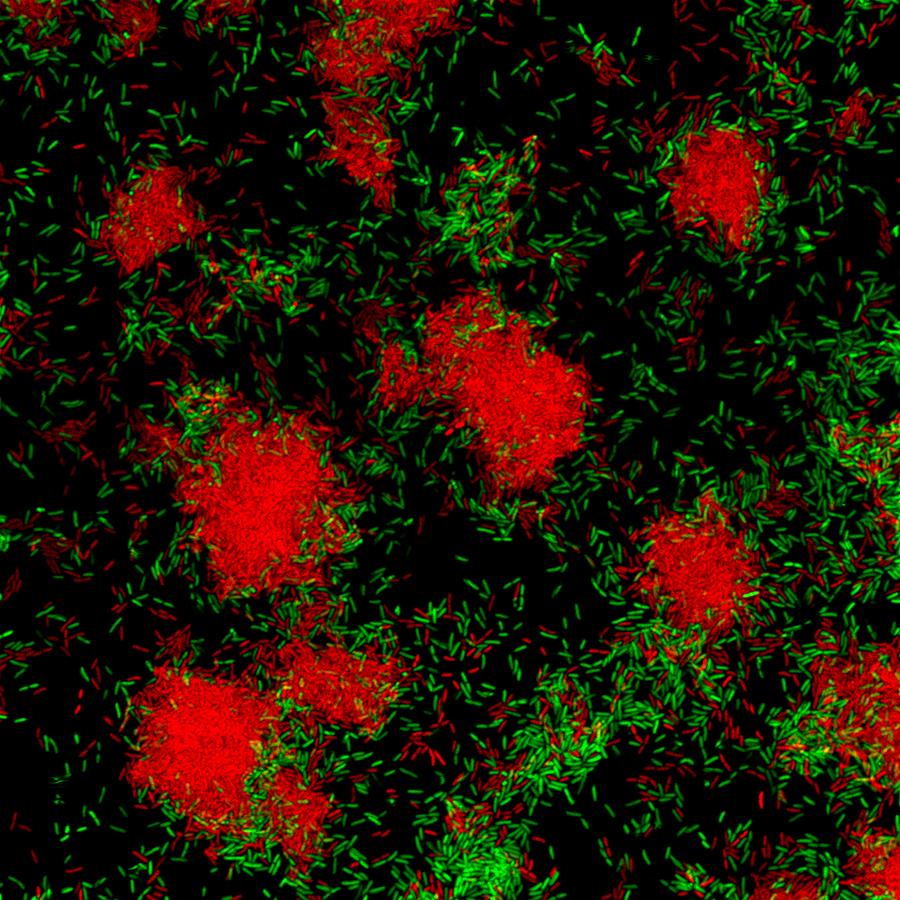
Most microbes live in spatially structured communities called biofilms, where chemical gradients, spatial organization, and ecological interactions create strong evolutionary pressures. These environments often generate remarkable genetic and phenotypic diversity within a single microbial population, yet many laboratory studies fail to capture this diversity.
Our lab investigates how this diversity arises and how interactions among specialized subpopulations produce emergent community behaviors. Using experimental evolution, comparative genomics, and imaging-based approaches, we seek to uncover general principles governing how microbial populations organize, persist, and adapt in structured, resource-limited environments.
The built environment as a reservoir of opportunistic pathogens
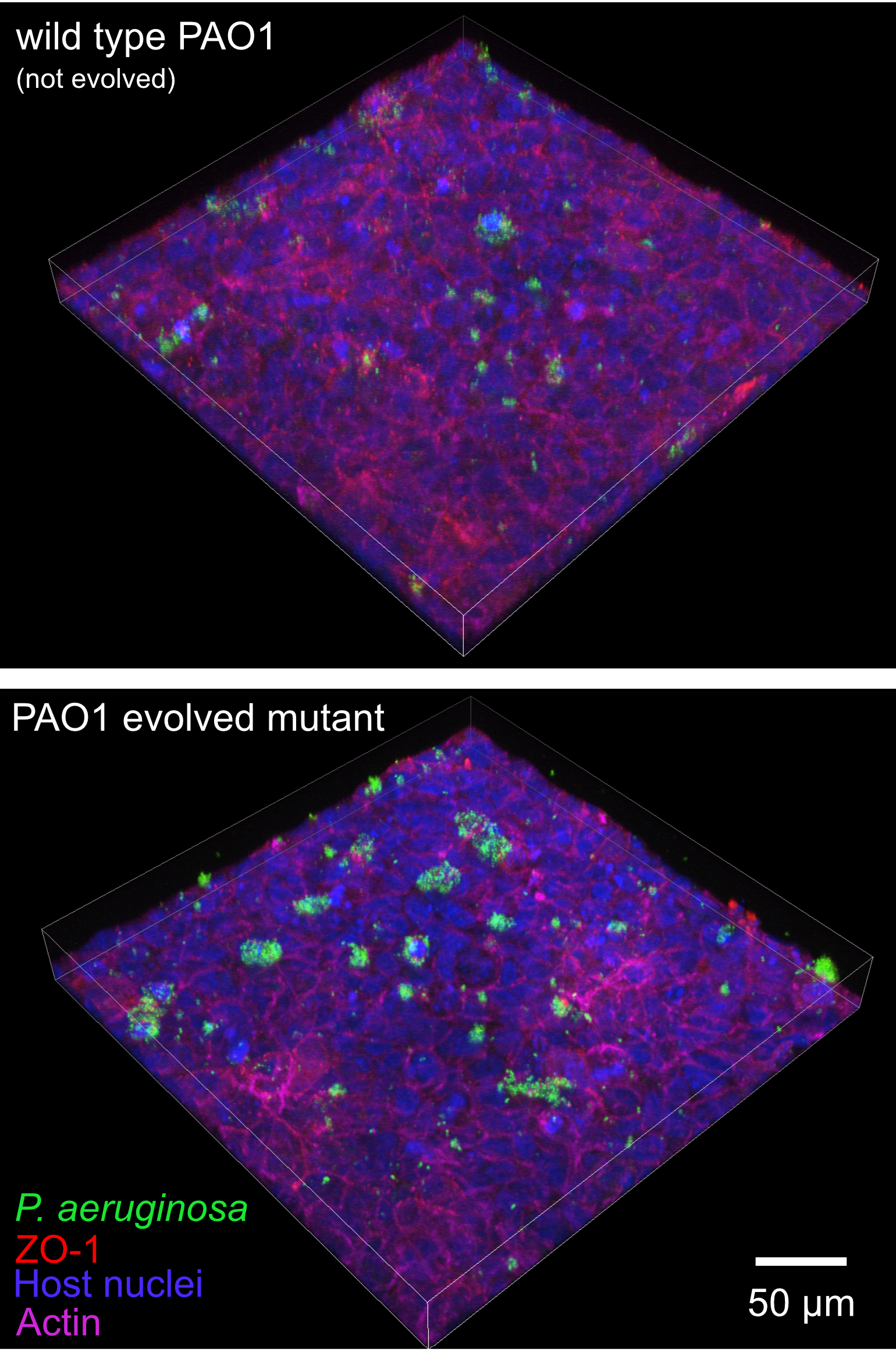
Many opportunistic pathogens originate in environmental reservoirs before infecting humans. Built environments, including drinking water systems and household plumbing, can harbor microbial biofilms that serve as sources of infection for susceptible populations.
Our research examines how microbes evolve in these environments and how that history shapes their ability to colonize and persist in host tissues. We focus on pathogens relevant to cystic fibrosis (CF), including Pseudomonas aeruginosa and nontuberculous mycobacteria (NTM), which may be acquired from potable water before establishing chronic respiratory infections. By linking environmental microbiology with host-relevant models, we aim to understand how built environment selective pressures influence traits involved in colonization, microbial competition, and chronic infection.
Microbiomes driving metabolic processes in the environment
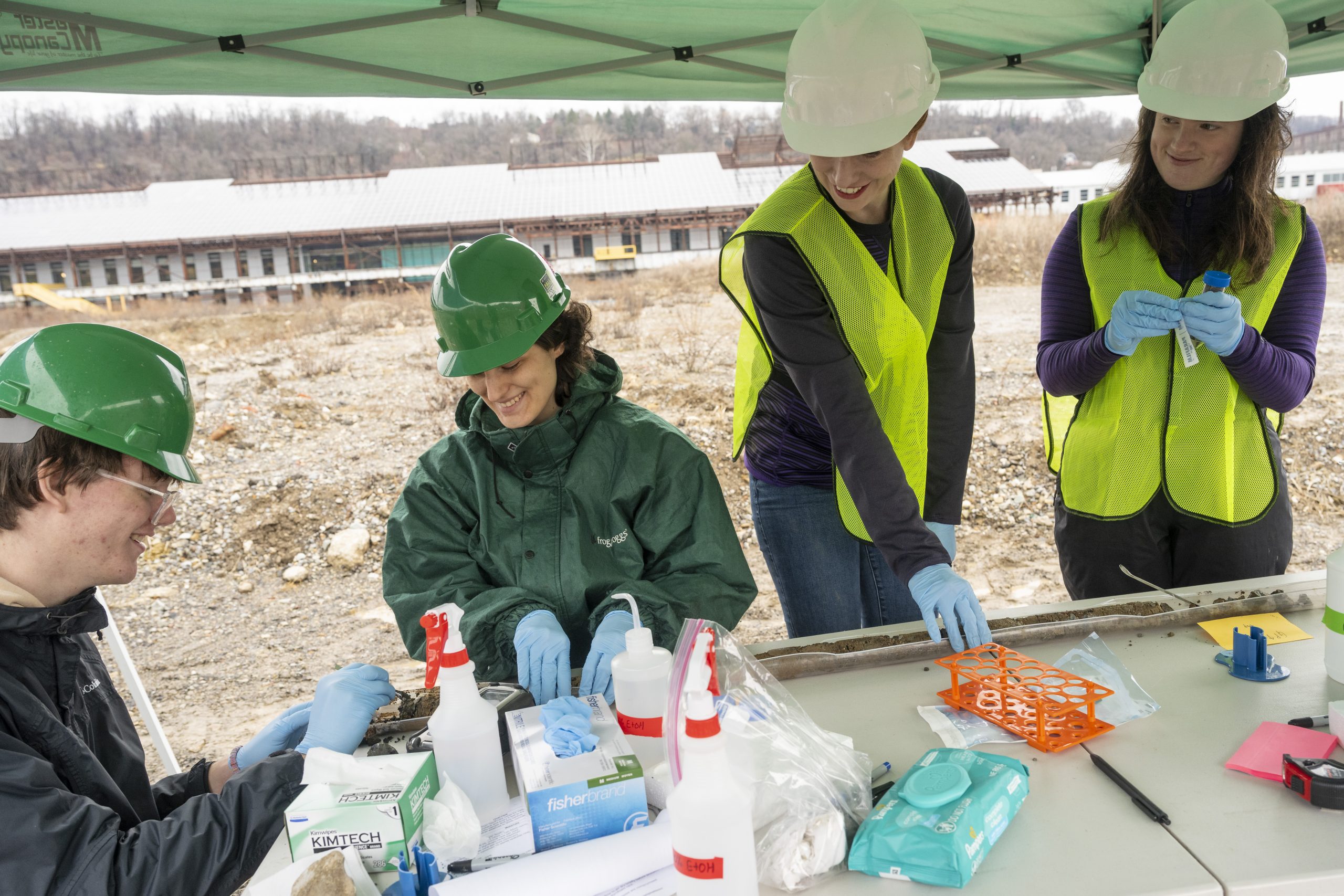
Microbial communities regulate critical environmental processes, including the transformation of pollutants and the cycling of carbon in soils and sediments. Our lab studies environmental microbiomes that transform aromatic hydrocarbons and other persistent contaminants in subsurface environments. Western Pennsylvania is home to over 250 legacy industrial brownfields, where decades of steel production and related industries left soils contaminated with compounds such as BTEX (benzene, toluene, ethylbenzene, xylene) and polycyclic aromatic hydrocarbons (PAHs). One site that motivates our work is Hazelwood Green in Pittsburgh, a remediated former brownfield that once housed a steel mill and coking facility where subsurface microbial communities adapted to long-term exposure to these compounds. By integrating metagenomics, microbial physiology, and environmental chemistry, we aim to link microbial community structure to ecosystem-scale processes and develop predictive frameworks for microbiome-driven environmental transformations of BTEX and PAHs.
Funding